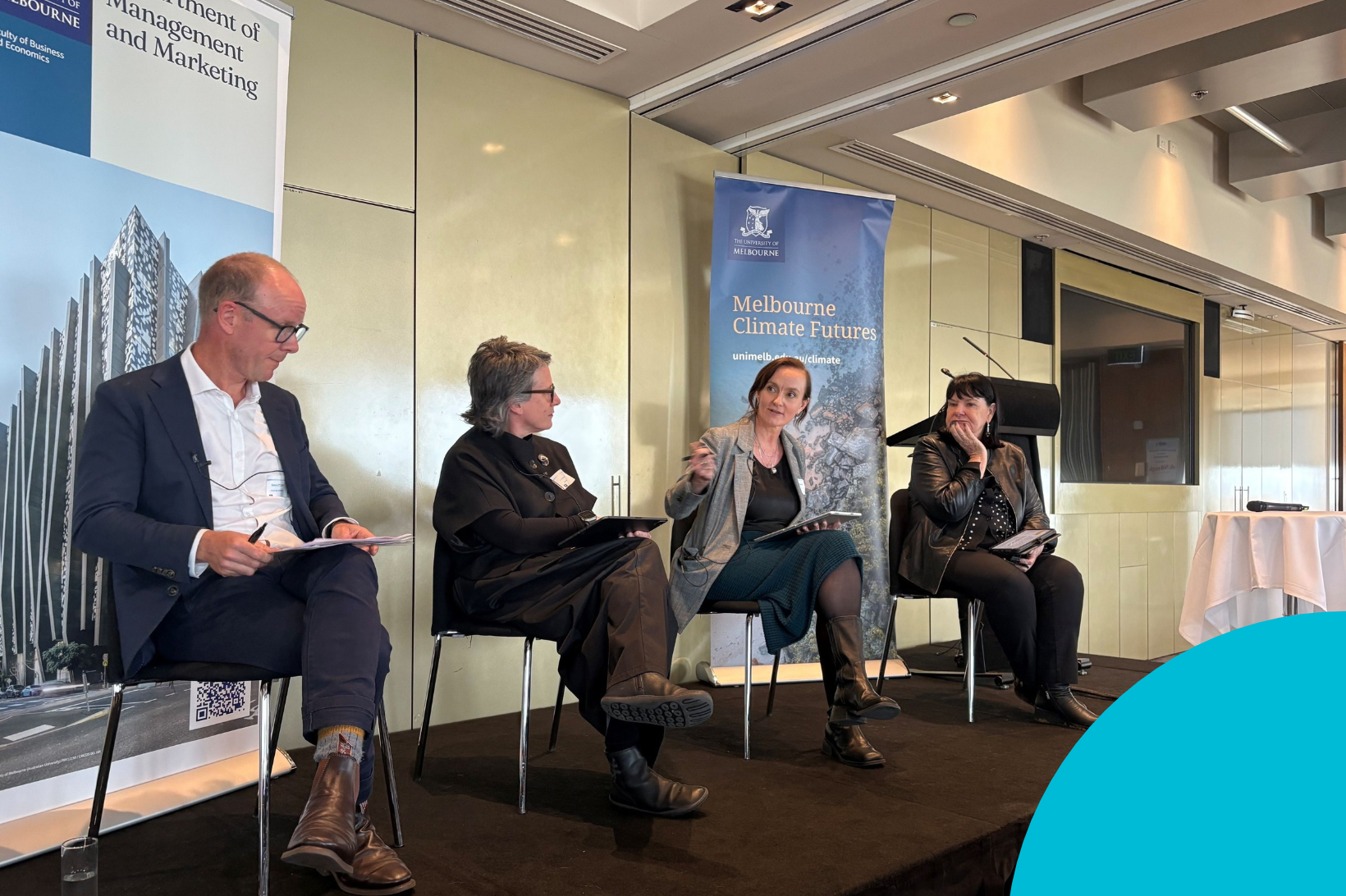
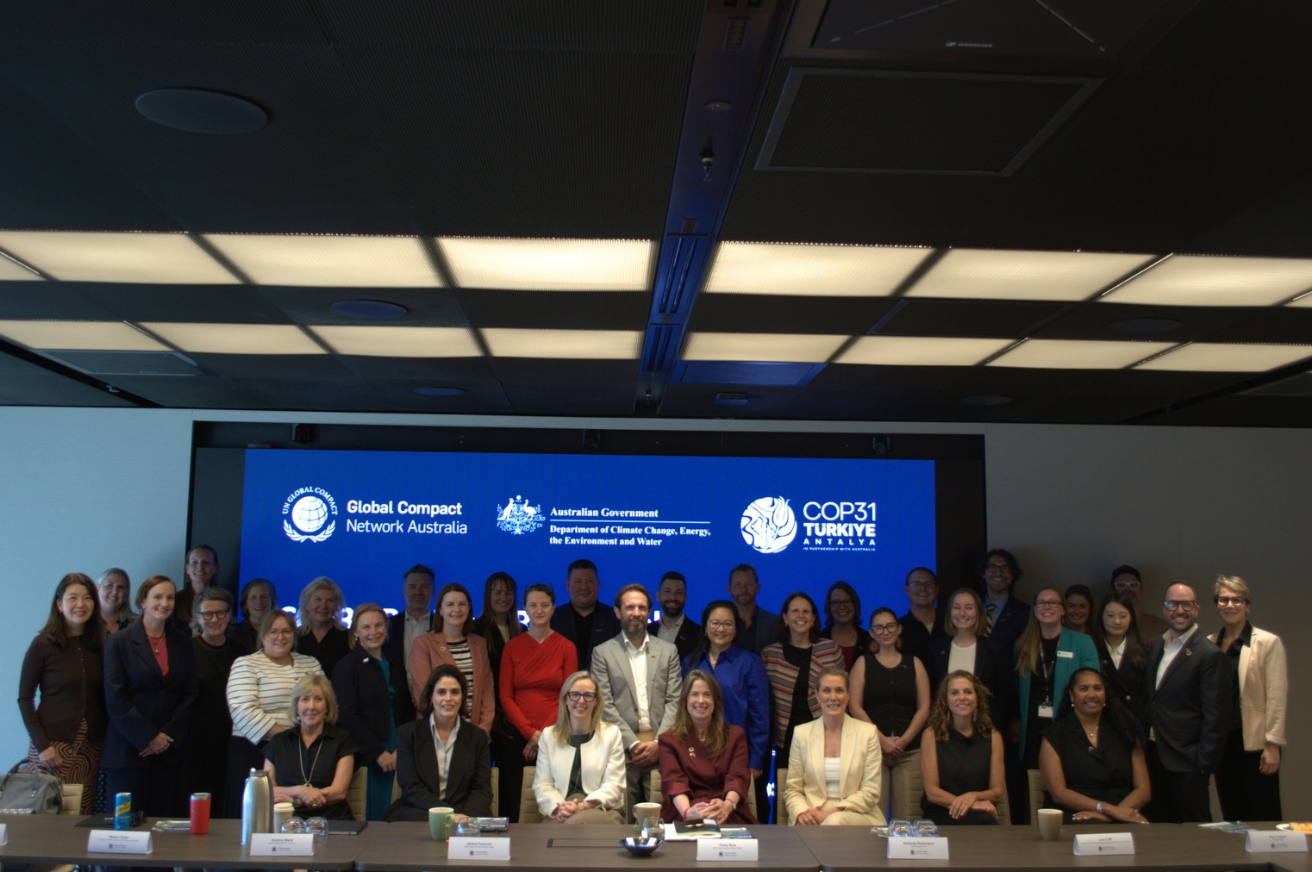
This tension ran through four recent discussions I was fortunate to attend: the University of Melbourne Sustainable Finance Hub’s Nature Economics in Australia symposium, a PRI and GCNA leadership roundtable, the Valuing Australia summit and the AICD Climate Governance Forum. Four themes stood out.
1. Climate and nature risk is not going anywhere
If anything, these risks are becoming more acute. Climate change-related weather events are already affecting assets, interrupting supply chains, raising insurance costs and eroding the value of exposed property and infrastructure: Australia’s 2022 east-coast floods, for example, generated more than $3.3 billion in insured claims, while more than one million Australian properties (around one in ten homes) have some level of flood risk.
It’s clear that board directors are becoming more attuned to these risks, although the framing is often through energy security, competitiveness and commercial resilience rather than climate change alone. At the AICD Climate Governance Forum, directors consistently rejected suggestions that companies were retreating from climate action: one senior director said there had been “no change on climate” in any of their boardrooms, while others highlighted that talk of an ESG rollback was largely irrelevant to investors because the underlying risks remain financially material. The strongest message was simple: all companies have exposure to climate, and effective oversight of that exposure is a core part of governance and risk management.
Nature loss creates equally material financial risks through declining water security, soil fertility, pollination and coastal protection. Australia’s one of the G20 economies most exposed to fragile ecosystems, particularly through water scarcity and declining coastal protection and pollination. Speakers at the Nature Economics symposium argued that these are not peripheral environmental concerns but productivity, inflation and credit risks. One study suggested that nature-related losses embedded in Australian bank loan books could reach A$30–50 billion a year by 2040 and compound substantially thereafter.
For investors, these impacts can flow through to lower revenues, stranded or impaired assets, higher operating and financing costs, increased volatility and weaker long-term returns across agriculture, food, property, infrastructure, tourism, insurance and other nature-dependent sectors.
Yet nature remains far less embedded in boardroom discussion than climate change. At the AICD forum, nature and biodiversity did not feature much in the program, and First Nations considerations were largely confined to a single session. This matters because climate, nature and people cannot be governed as separate issues. Boards and investors need to consider water, biodiversity, cultural heritage and Free, Prior and Informed Consent (FPIC) alongside transition plans and physical climate risk. They must recognise the economic opportunities for First Nations communities in a just transition. As discussion at the various events underscored, nature loss can be irreversible: once pollinators, ecosystems or cultural heritage are lost, disclosure after the fact cannot restore them.
The Melbourne Uni symposium and Valuing Australia Summit also challenged the economic assumptions that allow these risks to remain hidden. Conventional models often treat nature as a passive and effectively inexhaustible input, rather than as productive capital that depreciates when ecosystems are degraded. The state of nature constrains everything else in the economy and must therefore be built into economic optimisation, national accounts and investment decisions. In this framing, spending on restoration is not simply a cost: it can protect future productive capacity, reduce disaster losses and improve the resilience, insurability and access to finance of land and assets.
Why are climate change and nature loss not part of the national conversation we’re having about productivity?
2. Nature data is no longer the missing piece
A positive theme that emerged at the events is the growing maturity of nature-related information.
It’s clear that significant progress has been made in developing methodologies, data sources and reporting frameworks that help organisations understand their dependencies and impacts on nature. Symposium and Summit participants noted that location-specific assessments of water, deforestation and other nature-related risks can now be produced far more readily than even a few years ago. One of the traditional barriers to action - lack of available information - is therefore becoming less significant as data quality, analytics and accessibility improve.
The conversation is now moving towards how organisations use this information and how investors incorporate it into decision-making. Nature risk cannot always be assessed asset by asset: erosion, water stress, flood exposure and ecosystem degradation may originate elsewhere in the surrounding landscape. A systems-based, bioregional assessment can therefore be more useful than a single-point analysis. For banks, this creates an immediate opportunity to work with agricultural and other borrowers on land-management improvements that reduce risks across the loan book, while giving prudential regulators a basis to recognise improved environmental condition in their assessment of financial resilience. Importantly, bioregional planning, a strategic approach under Australia’s environmental laws, considers ecological, cultural, social, and economic factors across entire landscapes or seascapes.
3. Sustainability reporting is facing a new phase of scrutiny
A recurring theme is growing concern about the workload involved in sustainability reporting.
Representatives from some corporates argue that sustainability and climate reporting requirements have become increasingly resource-intensive, requiring significant time and effort to prepare. Questions are being raised about whether current reporting frameworks are delivering enough practical value relative to the investment required.
At the same time, many investors, sustainability professionals and industry leaders caution against viewing reporting solely as a compliance exercise. That view was strongly reinforced at the AICD forum, where climate was repeatedly described as a strategic issue rather than simply a sustainability issue. Speakers argued that mandatory reporting can improve the consistency and comparability of climate information, bring different parts of an organisation together and give boards a clearer basis for testing strategy and trade-offs. Climate reporting should therefore sit within the company’s risk-management system and be grounded in commercial reality, not treated as a parallel process owned only by sustainability teams.
The discussion signals an important shift in the debate. The challenge is no longer simply getting organisations to report. It is ensuring that the information disclosed is useful, comparable and actionable, and that boards can explain the judgements, assumptions and disclaimers behind it. The AICD forum also exposed the danger of allowing reporting to consume the time and capacity needed to respond to the risks themselves. The goal should not be disclosure for its own sake, but reporting that sharpens investment decisions about resilience, low-emissions investment, costs and new revenue opportunities.
One of the more notable discussions over the past few weeks has centred on the Productivity Commission's current work examining reporting obligations across the economy.
Concerns about cumulative reporting requirements are prompting policymakers to review whether existing frameworks remain fit for purpose. Speakers at the events I attended suggested there may be increasing pressure to reduce reporting burdens, including consideration of some sustainability-related reporting requirements.
For responsible investors, this highlights the importance of continuing to demonstrate the value of high-quality sustainability and climate information in supporting market transparency and investment decision-making.
Perhaps the most interesting insight has been that even among strong supporters of sustainability disclosure, there is recognition that current reporting practices are not always delivering what investors need.
Some investors argued that climate disclosures often lack sufficient detail, focus on overly short time horizons, or fail to adequately capture systemic and transition risks. The solution is not to reduce reporting expectations, but to improve the quality, relevance and decision-usefulness of disclosures.
This reflects a broader evolution in the market. As reporting frameworks mature, attention is increasingly turning towards how information is used and whether it supports better risk management, stewardship and investment outcomes.
4. Systems and integration
Across the various fora, there was strong support for more integrated approaches to corporate reporting. Directors described the effort required to reconcile climate and sustainability disclosures with financial statements, directors’ reports and audit processes, and argued that these should tell one coherent story rather than operate as separate exercises.
Bringing financial and sustainability information together can give boards and investors a more complete picture of organisational performance, dependencies, risks and opportunities. It can also expose gaps between what companies disclose and what investors ask about: at the AICD forum, one chair observed that investors had read the company’s climate report but were not yet consistently using it to shape their engagement. Others have highlighted the common use by investors of data providers, which systematically scrape company sustainability reporting and combine this with other information to provide investors with a wider picture and assessment of how companies are positioning for the climate and nature transition.
A systems perspective also broadens insights beyond company-level disclosure. Long-term and universal owners need to consider policy settings, energy-system resilience, nature dependencies and economy-wide risks, and to engage policymakers where market-wide outcomes affect beneficiaries. The symposium highlighted that markets will undersupply restoration and other public goods without collective action.
Government therefore has a central role in science-based bioregional planning, environmental law reform, credible market instruments and creating the commercial incentives needed to attract private capital at scale.
Investors, meanwhile, can support restoration finance, seek evidence that nature risk is reflected in lending and valuation, and use stewardship even in increasingly passive markets. Stable policy remains important, particularly for hard-to-abate and nature-dependent sectors facing technology, infrastructure and cost constraints. But uncertainty is not a reason to delay: the cost of doing nothing, and the risk of being overtaken by changing regulation, technology or customer expectations, must also be considered.
What this means for RIAA members
Five practical implications stand out for RIAA members:
1. Keep climate and nature anchored in financial materiality. Despite political debate and “ESG rollback” headlines, these risks are intensifying and increasingly affect asset values, productivity, credit, insurance and long-term returns.
2. Advocate for decision-useful reporting. As company reporting faces scrutiny, investors must advocate for information that is proportionate, connected to financial consequences and useful for strategy, stewardship and capital allocation.
3. Use the nature information now available. Better location-specific data and analytics mean that lack of information is becoming less of a barrier. The priority is to connect impacts and dependencies to valuation, lending, transition plans and investment decisions.
4. Look beyond individual assets. Climate and nature risks often arise across landscapes, supply chains and economic systems. Investors should also engage governments, regulators, banks and companies on system-level responses.
5. Integrate climate, nature and people. Effective governance should bring together climate resilience, biodiversity, water, cultural heritage and FPIC while recognising communities as partners in a just climate and nature transition.
<hr>
<small> Disclaimer: The above content is provided by Responsible Investment Association Australasia (ACN 641 046 666, AFSL 554110) for information purposes and is not an offer to buy or sell a financial product, and is not warranted to be correct, complete or accurate. For more information refer to our Financial Services Guide on the RIAA website. Any general advice has been provided without reference to your investment objectives, financial situation or needs. If the advice relates to the acquisition of a particular financial product for which an offer document (such as a product disclosure document) is available, you should obtain the offer document relating to the particular financial product and consider it before making any decision whether to acquire the product. Past performance does not necessarily indicate a financial products’ future performance. To obtain information tailored to your situation, contact a financial adviser.

Co-CEO
,
RIAA
With a distinguished 20-year career at the Department of Foreign Affairs and Trade, Estelle Parker brings crucial expertise in government relations, policy-making, and themes important to responsible investors, including human rights and the SDGs. As a leader driving RIAA’s research, certification, policy, standards, and working group programs, her leadership has elevated these initiatives to achieve heightened levels of professionalism, impact, and value delivery for our members, aligning seamlessly with RIAA’s strategic objectives.
Beyond her organisational impact, Estelle is a respected figure in the responsible investment landscape, serving as a strong advocate on influential global and government committees, including the Principles for Responsible Investment’s Global Policy Reference Group, the Global Sustainable Investment Alliance (as a Board member) and the Australian Government’s Natural Capital Working Group. Additionally, she serves as the Convenor of the Taskforce on Nature-Related Financial Disclosures official Consultation Group for Australia and Aotearoa New Zealand, and the Steering Committee for the Australian Sustainable Finance Institute. She is also the Vice President of the Council of the Australian Institute for International Affairs (Victoria).